
Our favourite internet encyclopaedia says that this fine building is the parish church you might find in the Kent village of Detling. However, this isn’t a church. This is a church building. I know what you are thinking. Some pedantry (irritating wordplay practised by people pointing out the precise and proper meanings of words which are commonly confused) is just annoying. Except for the pedant that is, who never tires of being pedantic. I plead guilty to all charges, Your Honour.
Sometimes the distinction is important, and this is one of those times. Maybe you know the children’s rhyme with hand actions that goes like this:
Here’s the church and there’s the steeple.
Open the door and see all the people.
And it continues like this:
Here’s the parson going upstairs.
And here he is now he’s saying his prayers.
which all comes from a traditional nursery rhyme which enthusiastic parents can sing to their little nippers at bedtime. Click that link for additional lyrics, with a restful rhythm and guitar accompaniment. At least, that’s their intention. You might argue about whether restful is the appropriate adjective. But that would be pedantic of you.
If you need reminding, here is a website to show you and your nearest child how to say and act out the rhyme. Despite what it says in this guide, you MUST wiggle your fingers at the end. Now don’t say I didn’t warn you: here are some very enthusiastic child actors giving a demonstration in a short video, with jaunty background music. As Jesus includes everyone in His Church, the American accents are included at no extra charge. I’m not sure they are doing the actions quite as in the official instructions- or is that me being pedantic again?!
Seriously though, the hand actions and rhyme at least make the point that the church and the people go together. Inextricably. No people- no church! As it says on this church billboard…
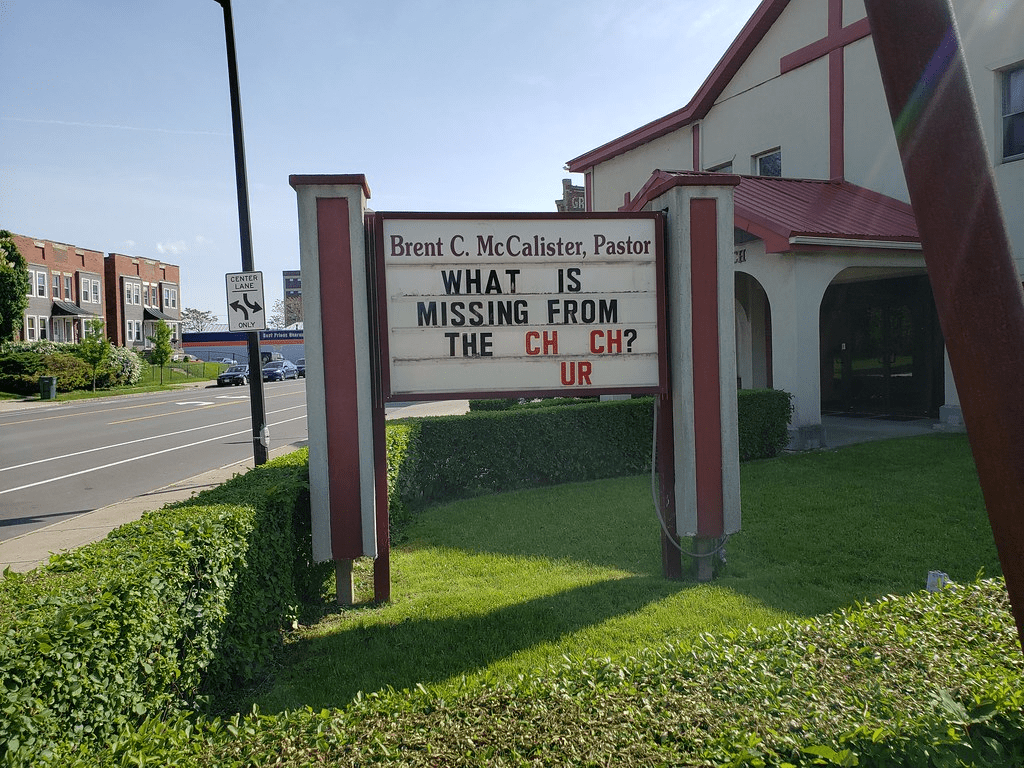
What’s the reason we’ve become confused about what the word church means? Is it traditionalism and religiosity? Is it a convenient distraction technique that appeals to humanists and atheists? Say that the church is the building, or the specific time that the service is held, and that takes the focus away from what Church really is. The Greek New Testament word is ecclesia, which literally means, ‘the called out ones who meet‘. The term was borrowed or co-opted from ancient politics. [Greek Ekklēsia, (“gathering of those summoned”), in ancient Greece, assembly of citizens in a city-state. Its roots lay in the Homeric agora, the meeting of the people.] So you see the emphasis is all on the people and not at all on the place or even the time at which they meet. When Jesus says, “I will build my Church” he isn’t ever expecting us to think we need to pop down to the builder’s merchants. The certainly don’t stock hell-proof bricks or roof tiles. The ‘Church’ Jesus is talking about is of a more eternal order.
I appreciate the children’s rhyme because it is made by the singing and acting person, as they perform it. If you include the second line, then the person reciting it is brought to think about prayer- our actual connection with God. Though this isn’t quite right either, as we don’t need an official (parson, priest, vicar, pastor or whatever you want to call them) to act as a go-between for us; another misconception that warrants pedantic treatment. The Reformers spoke up for ‘the priesthood of all believers,’ and I believe in it.

Now I expect you are ahead of me here. In the UK it rains from time to time, so it’s a good idea to have a building with a roof and even some heating to make the meetings of the ecclesia a bit more comfortable. It seems that a public address system and sound desk are absolute necessities to ‘do church’ these days, and neither of those like getting wet, nor do we want them stolen. In Kenya, my Christian friends put up roofs to keep the sun out– as well as to look after the sound system. So we need church buildings, though perhaps they could be more flexibly designed to accomplish daily community functions as well as spiritual ones. The profound truth is clear: we are fleshly creatures living in a physical universe, and it is perfectly reasonable that once a church fellowship community has grown too numerous to meet in people’s domestic dwellings that we plan larger structures to make life more practicable, whether we need to keep out rain or sun, or keep in the heat and the music system, fold back speakers, TV monitors and live streaming video system. And the hymn books.
But there I go again, and some readers might want to get pedantic with me.
There is a great risk, isn’t there, that as soon as we start building, we might start building an empire. This is what happens in Genesis 11:1-9. Pick up bricks and people start expressing their worldviews. This is certainly what is going on in this account, whether we want to read these verses figuratively or as literal history. Who is in charge in this world? You or me? Us or God? We want to make a name for ourselves, they said, so they built a tower up to heaven to make sure that He knew that.

11 Now the whole earth had one language and the same words. 2 And as people migrated from the east, they found a plain in the land of Shinar and settled there. 3 And they said to one another, “Come, let us make bricks, and burn them thoroughly.” And they had brick for stone, and bitumen for mortar. 4 Then they said, “Come, let us build ourselves a city and a tower with its top in the heavens, and let us make a name for ourselves, lest we be dispersed over the face of the whole earth.” 5 And the Lord came down to see the city and the tower, which the children of man had built. 6 And the Lord said, “Behold, they are one people, and they have all one language, and this is only the beginning of what they will do. And nothing that they propose to do will now be impossible for them. 7 Come, let us go down and there confuse their language, so that they may not understand one another’s speech.” 8 So the Lord dispersed them from there over the face of all the earth, and they left off building the city. 9 Therefore its name was called Babel, because there the Lord confused[a] the language of all the earth. And from there the Lord dispersed them over the face of all the earth.
Genesis 11:1-9 ESV
What I love about this story is that God actually takes note of the humans’ big-headed ideas. That really is quite funny. Why on earth should He? The answer is important. I’m sure you know how to make God laugh. Tell Him your plans, as the old gag puts it. Fortunately, God has a plan too, a much better one, and this does involve us, because God wants his eternal plan to include us. The various Babel-onians need not have worried. As I have explained before, though excluded from Eden, God is still paying attention to us. But on His terms, not ours. That’s what was wrong with their tower plan. We want to be in charge, to make the plan, to be the boss. As the picture above shows very dramatically, God turns up to sort out the situation. Or rather, he comes down. We can’t get up to God, but He can choose to come down to us, which is what Incarnation means. (That’s Christmas, if you need reminding. See the post before this one.)
The result is that the ones who all came together to meet and make their own Community were frustrated by God’s judgement. It’s God’s cosmos and God’s world and God’s future and God’s plan- not ours! But don’t get the hump now and pretend that our self-image and personhood and freedoms are inhibited by any of that. Don’t misrepresent God’s intention. Freedom is a real thing, with proper boundaries, because there must be boundaries. Like walls. Otherwise anything goes and that’s chaos.
I was thinking about the buildings that are mentioned in the Bible. There are no buildings at the start of Genesis. The meeting place of humans with God is God’s garden. There is no palace or temple. Maybe we come to realise that the cosmos is the temple-palace, and God desires to share it with us. We get all the way to Genesis 11 before there is mention of a proper building, though that is after the gopher wood boat that Noah makes to become a floating zoo. Does the early Genesis narrative mean to suggest to us that early people did not construct significant buildings? Not at all, if you want to ask that question. The technologies that the line of Cain are credited with are beyond that required to build dwellings or even palaces. But we are not being given a history of human civilisation as would be found in a good encyclopaedia. The Babel account we’ve just read is proof enough that our ancient history and civilisation, with its technologies, is taken as a given. Making (fired) bricks from clay, and harnessing the potential of tar to stick them together is a shorthand for all that. The towering pile of bricks isn’t the issue- its our collective towering hubris that is in focus.
Fast forward to the literal Creation Story of the Hebrew Bible: the Exodus of God’s Chosen People from Egypt. That’s the easy bit. Once God gets Moses and all the people out from under the godless rule of the stubborn Pharaoh of Egypt, its time to tackle the much harder task of getting Egypt out of the Israelites. Its what’s inside us that poses the real challenge, if we’re honest. We pick up deeply insidious ideas about life and meaning and what’s really valuable from those around us- all of culture and history and society and our habits- and its a job of considerable dimensions to sort that out. (Which is much of what Christian doctrine calls sin.)
At the start of the book of Exodus, the second book of the Hebrew Bible, the many descendants of the sons of Jacob, of Joseph and all his brothers, are now very much enslaved and oppressed by the Pharaoh king who wants a bigger palace for himself, and bigger temples for the Egyptian gods. Though divided into nations, the Babel-on project hasn’t died yet. The Israelite slaves are now making mud blocks by the truck load (sorry- cart load). Every day its B&Q and their overlords’ demands keep going up. (B&Q: Bricks and Quotas). And they’re singing, ‘There must be more than this…’
Quite so, but not the way we might expect. In short, when God gets them out into the desert, He gives instructions to build a meeting place for the priests to meet with God and bring the community together in God’s Peace (Shalom). This meeting place is mobile, as the community is often on the move. The Tent of Meeting, or Tabernacle, has just a few sacred items inside. In stark contrast to the pagan temples of the Egyptians and everyone else, there is no idol in the holiest place. There is no stone or other image of the god. You may know that the Exodus commandments specifically forbade God’s human creatures from making images or representations of the Deity. What there is is a box, the Ark of the Covenant, and what lives inside is Aaron’s old walking stick, a packed lunch and the second tablets of stone with God’s Ten Commandments written on them by Moses. On the lid are a pair of figures representing the worship of the Invisible and Awesome Holy God in a form that we can just about understand. These so-called cherubim represent heavenly beings that attend God, shown in obeisance, shielding the ark below them with outstretched and touching wings. In this sculptural form the idea of stuff and Spirit coming ever-so-briefly into contact with each other is denoted. Thus, in the dramatic picture-model of the Tabernacle, God comes to be with us in a manner the wandering Israelites could relate to, and we too can now grasp.
When we make things they speak of our worldview, in some measure, and the construction by Bezalel and Oholiab of the Ark, to the given instructions, does just that. God is Present with God’s People. The Word of God has come from the unseen realm to the people under Moses’ care. The dead stick has come to life. The memorial meal of manna recalled the season through which God fed His chosen people directly by supernatural means. All is covered in the most valuable gold (recycled from the terrified Egyptians, Ex 12:36) and symbolically attended by God’s heavenly retinue. But what the ark is really only makes sense as the point of meeting between God and God’s people, between heaven and earth, and it is a real Encounter. God really did turn up, or Presence Himself.
Now I keep having to say that the only humans in this Divine-Human partnership were the Israelites, as only they were the covenant people of YHWH. But that did not mean that God’s Presence could not be tangible to anyone else. The Presence I keep referring to was not a piece of myth or spiritual mumbo jumbo, having its only existence in the suggestible minds of gullible Jews. We see the proof of this in 1 Samuel 5, when the Philistines (Israel’s war-hungry next door neighbours) captured the very Ark of God and took it back to the temple of their own god, Dagon. The best way to brag about your victorious triumph over your enemy would be to put their idol next to the image of your own god in your home temple. ‘Our god is bigger and better than yours’, ‘In your face!’ and all that stuff. Which is what happens:

Despite allowing the ark to be captured and taken to Ashod, the capital of the Philistine nation, God has no truck with their blasphemy. During the night, as the ark is left in the empty building before the image of their own god- which is actually a no-thing, I might say, whereas God’s Presence is Living and Active- the idol statue of Dagon fell down in front of the Lord’s ark. With impressive attention to our modern scientific sensibilities, the text records that the curious priests of Dagon set up the whole investigation again, only to discover that the first result was not an anomaly but thoroughly repeatable! The artist above gets the scene just right. The pretence of the priests of Dagon has been exposed, and now they find that they are themselves very close to the Presence of the True God of the cosmos. This is God’s true plan; not the showdown between true and false gods, as much as the realisation amongst all God’s human creatures that the covenant God of Israel is introducing Himself to us all, inviting us all to Encounter. These are His terms and conditions and are much more in our favour than we might appreciate. The true temples are not just buildings for God; rather, it is where God comes to be in permanent Presence with God’s peoples. There is no need for statues or idols if there is vital encounter and living relationship between Creator and creature. His Spirit is manifest and His people meet Him!
A very similar scene is depicted in the image below. The artist had produced a more complete picture- we can see the roof pillars in fully finished detail, while the ark is lined up properly on the previously empty plinth behind, though now in shadow, rather than the light- and as a result this picture loses much of the thrust that the former one has for me. Perhaps you agree. The core message is the same. The priests of Dagon, and all the Philistines, are together challenged to re-evaluate their worldview, for God has come down to see their affairs and has judged their idol god. Now they must decide what to do next. Tragically, they do not reach out to the True God who has so far been merciful to them, and are afflicted with diseases for their stubbornness.

5 When the Philistines captured the ark of God, they brought it from Ebenezer to Ashdod. 2 Then the Philistines took the ark of God and brought it into the house of Dagon and set it up beside Dagon. 3 And when the people of Ashdod rose early the next day, behold, Dagon had fallen face downward on the ground before the ark of the Lord. So they took Dagon and put him back in his place. 4 But when they rose early on the next morning, behold, Dagon had fallen face downward on the ground before the ark of the Lord, and the head of Dagon and both his hands were lying cut off on the threshold. Only the trunk of Dagon was left to him. 5 This is why the priests of Dagon and all who enter the house of Dagon do not tread on the threshold of Dagon in Ashdod to this day.
6 The hand of the Lord was heavy against the people of Ashdod, and he terrified and afflicted them with tumours, both Ashdod and its territory. 7 And when the men of Ashdod saw how things were, they said, “The ark of the God of Israel must not remain with us, for his hand is hard against us and against Dagon our god.” 8 So they sent and gathered together all the lords of the Philistines and said, “What shall we do with the ark of the God of Israel?” They answered, “Let the ark of the God of Israel be brought around to Gath.” So they brought the ark of the God of Israel there. 9 But after they had brought it around, the hand of the Lord was against the city, causing a very great panic, and he afflicted the men of the city, both young and old, so that tumours broke out on them. 10 So they sent the ark of God to Ekron. But as soon as the ark of God came to Ekron, the people of Ekron cried out, “They have brought around to us the ark of the God of Israel to kill us and our people.” 11 They sent therefore and gathered together all the lords of the Philistines and said, “Send away the ark of the God of Israel, and let it return to its own place, that it may not kill us and our people.” For there was a deathly panic throughout the whole city. The hand of God was very heavy there. 12 The men who did not die were struck with tumours, and the cry of the city went up to heaven.
1Samuel 5: 1-12 ESV
David is king in Saul’s place by the end of the first book of Samuel, and he begins a process of planning a permanent temple for YHWH God’s Presence in Jerusalem, which is carried out by his son Solomon. God didn’t really want a temple to be built for Him, but God allows his people to twist His arm and so He reluctantly issues some instructions. It seems we are allowed significant lee-way in deciding how Revelation will come to us from Godself. But then that temple was destroyed through invasions and the exile to Babylon, and then later rebuilt after their return to the same pattern, more or less. This photo shows a modern model built for the enjoyment of tourists to Jerusalem:

Now an ark was placed in the Most Holy Place of the main structure shown above, (and see below, in the cutaway diagram), with some other ritual items in the Holy Place, but the thing that surprised the Romans who were occupying Palestine was that there was no idol inside the temple. Roman emperor Caligula had declared himself a god and tried to force the Jews to accept his statue inside their temple. They vigorously objected- and then Caligula was assassinated! Once again the Presence of God was at work. After the sack of Jerusalem, Pompey went up the Temple mount and entered the Most Holy Place. After looking around, he left and allowed the rituals to continue temporarily, and he survived that experience*. This is consistent with what we saw in 1 Samuel 5. God is not so precious about His sacred spaces after all, because what God really intends is that we reach out to Him and find Him. He wants us to find Him and to be found by Him. Denying that truth is the real blasphemy.

Where is all this leading us? The Hebrew Bible does not set out to offer us lessons in regard to building construction or architecture, though we are supplied with numerous details about the Tabernacle and Solomonic temple. Ultimately, these are incidental to the core message. What we learn from the Tower of Babel account is how God intervenes to correct our misguided human attempts to take charge of our own destiny. It may be that we conclude that God frustrates such intentions, but this is a judgement of grace and hope, to restore us to relationship with Him and to open a way of return. The later construction of the Temple puts stones, timbers and ornamentation around the Tabernacle model of priestly encounter between God and High Priest. It is not so much that God is vigorous in forbidding our crude attempts to imagery and idolatry as that God keeps a clear space in our experience so that we can, if we are willing to humble ourselves, find an open way to come to fruitful and intimate relationship with God. Because the discovery of the New Testament is this: We are to be the receptacle for God’s Presence. There is no idol in the Tabernacle and Temples because God’s intention was always that WE are the true image of God, the image and likeness of God in God’s world, and this means that it is the people of God, the Body of Christ, that are the new temple for the Presence of God. Christian people are promised the Presence of the Spirit of Christ. This is the consummation of the prophetic pictures of tabernacle and temple. The Temple curtain was torn in two at the first Easter as God’s Presence moves from the single site of meeting between God and humankind (in Israel alone) at the Most Holy Place to the hearts of every single believer and disciple of Christ Jesus, across the whole of God’s world.

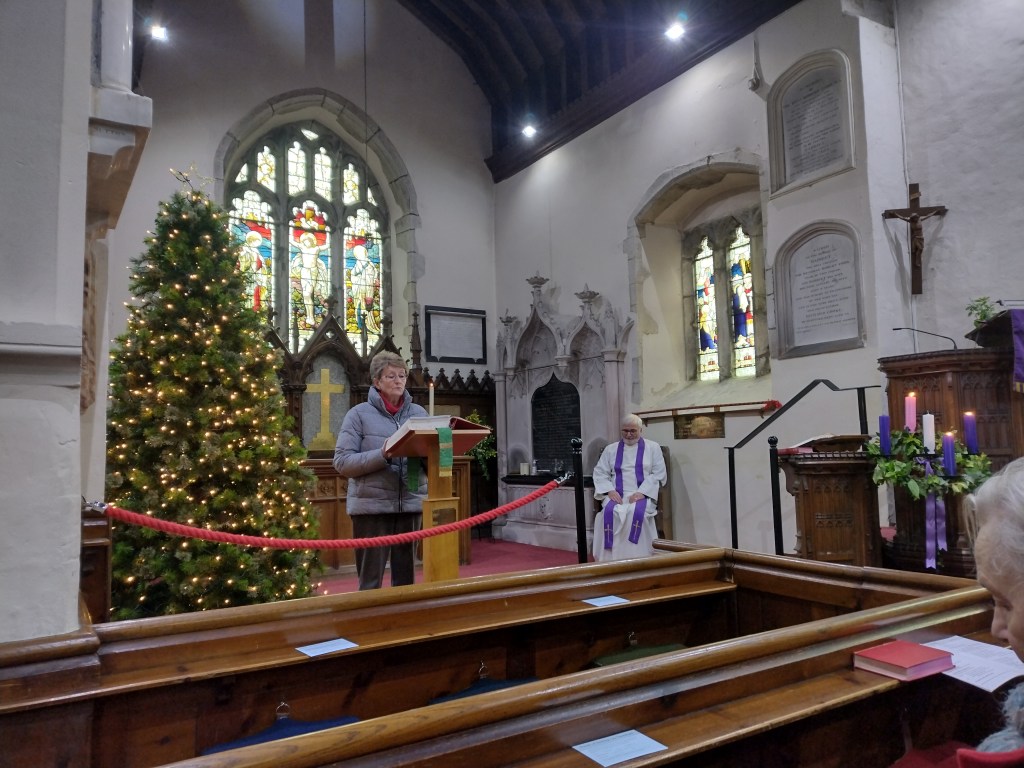
And so we come to the Church Age and this current iteration of buildings; our eclectic hodge-podge of constructions that need not be thought to be at the centre of spiritual significance. The fellowship I am principally committed to now meets in a repurposed school hall and associated catering spaces. While this last Sunday morning I was reading the lesson at the Parish church of St Martin of Tours in Detling village, on the northern borders of Maidstone, nestled under the scarp slope of the North Downs. The true locus of spiritual attention is not inside boxes made of new bricks or old stones, but in the people who meet in those boxes, or elsewhere in the temple of God’s good Earth and cosmos.

But my church fellowship has practical needs and vision for community impacts that in significant part require bespoke buildings. Just like many other non-denominational Christian fellowships, we have continued to grapple with these twin priorities and struggle in the grace of God to keep them in constructive tension. What do we want to live inside the box of the buildings we inhabit? We are convicted that there should be no ultimate division between our worship and our work– our meeting together as a worshipping community, and our service and love expressed in the Community. After at least a two-decade season of searching and wondering, we finally came to the realisation that a site in the middle of an industrial park adjoining the side of town that is both most deprived and also developing with new build properties was most fitting for this vision. God spoke for this, we believe, through the generous donations of sponsors, so we could buy a large empty property in the trading estate, and now find that the modified local planning regulations allow us to knock it down and make exactly the kind of bespoke provision that will make community action projects, business activities and sabbath celebrations all the more feasible. The experience of knocking down helps us to grasp our temporality. The huge budget helps us remain dependent on God. When its all up and running we will have to remember these lessons. And in the meantime, we are blessed by a local fellowship who are sharing their facilities with us as we patient in our sojourning, saving up and serving God’s purposes as saints of God partnering with Him, heeding His call to be filled with His Spirit. As we try to balance the call to be free of the burdens of property and stuff in general, ready to Go! as He directs, and yet also to embrace the communities to which we are called, sowing our riches into their redemption and thriving, we conclude that this is how God’s Presence desires to be met, in His People, and so with His World.
May God continue to come down on this project to make His Name great, as He fills His Servants with His Living Spirit.

© 2023 Stephen Thompson
Notes.
- * You might remind me that there is a crucial fact that is pertinent to Pompey’s survival after his blasphemous visit inside the temple- that being that at the resurrection of Christ, the Temple curtain was torn in two, and this is understood to show that God’s particular Presence left the temple. Thereafter, though the Jewish priests would not admit it, the Most Holy Place was no longer any more special or particular for the meeting of the representatives of Israel and the God of the cosmos, YHWH of the Jews. God was no longer particularly present there, compared with anywhere else on earth: His Presence was now, if it is to be found anywhere in particular, in and with His people whom His Spirit would fill and empower. So God was not present in the way that had earlier been the case when Pompey arrogantly barged in. I do wonder if the Jews themselves could tell the difference. I’ve never heard if there was any account regarding the claim of the gospels that the Temple curtain was torn. Presumably a quick repair job was initiated and quite understandably, never mentioned.
- Peter Bruegel made three images of the Tower of Babel, as you can see and read here: https://en.wikipedia.org/wiki/The_Tower_of_Babel_(Bruegel) Bruegel’s paintings both encapsulate the attitude of hubris in our grandiose schemes.
 common or garden theologian

